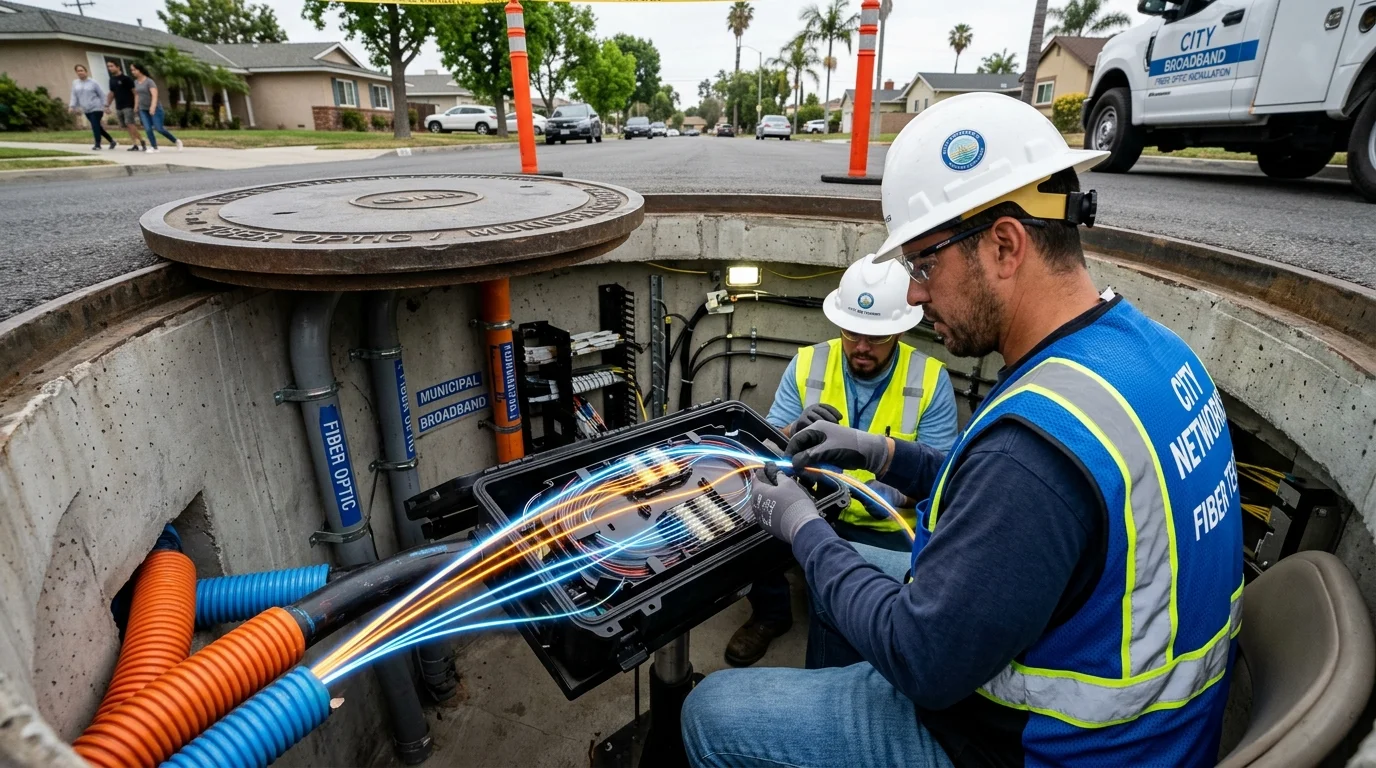
Faster, Cheaper Internet for Fountain Valley Without New Taxes
September 23, 20265 min

📄 Companion Report: For full financial modeling, legal citations, and contract safeguards, read the Detailed Policy Report (PDF).
Mark Leonard | Fountain Valley City Council candidate
Modern forensic tools help our police solve property crimes and recover stolen vehicles. However, I permanently oppose contracting with Flock Safety or any vendor that compromises local data sovereignty, maintains documented cybersecurity vulnerabilities, or enables warrantless nationwide surveillance tracking. Public safety and constitutional rights are not opposing goals. Fountain Valley must establish strict standards for public safety technology: local data custody, an automated 30-day deletion schedule, strict prohibitions on warrantless out-of-state sharing, and mandatory public audit logs.
Automated License Plate Readers (ALPR) are effective when deployed with narrowly scoped search criteria tied to active felony investigations. But outsourcing city surveillance infrastructure to centralized private cloud vendors creates profound constitutional and cybersecurity risks.
Flock Safety pools vehicle movement data into an interconnected national network accessible to thousands of outside entities. In June 2024, a Norfolk, Virginia Circuit Court ruling determined that warrantless, dragnet collection of vehicle location data violates Fourth Amendment protections against unreasonable searches.
Entrusting municipal surveillance data to third-party multi-tenant cloud platforms creates severe digital liability:
Under California Civil Code § 1798.90.5 et seq. (SB 34 - Automated License Plate Reader Privacy Act), public agencies must maintain strict operational security and public transparency. Entrusting municipal surveillance to high-risk private cloud providers exposes the city to major legal and security liabilities.
Fountain Valley should enforce four non-negotiable requirements for any public safety technology:
As a Marine Corps veteran and operations analyst, I know that real security depends on discipline, clear rules of engagement, and institutional accountability. We can support our local police department with effective investigative tools while vigorously defending the Fourth Amendment privacy rights of every Fountain Valley resident.
Mark Leonard is running for Fountain Valley City Council.
📄 Download Companion Report: Read the full Detailed Policy Report & Financial Analysis (PDF)
Mark Leonard is running for Fountain Valley City Council. This article is part of his campaign to bring fiscal transparency and community-first solutions to our city.
Share your thoughts on this issue. We're building a campaign grounded in the real concerns of Fountain Valley families and residents.