Why CA-45's Housing Crisis Is a Policy Problem, Not a Market Problem
May 8, 20264 min
Every household and small business in Fountain Valley is feeling the sting of skyrocketing Southern California Edison (SCE) electric bills. Regional grid upgrades, wildfire mitigation liabilities, and utility inflation have pushed summer peak residential electricity rates past 50 cents per kilowatt-hour. For families trying to keep air conditioning running and local storefronts operating refrigeration or lighting, power bills have become an unsustainable second tax.
To make matters worse, recent state regulatory shifts under NEM 3.0 (the Net Billing Tariff) slashed midday solar export credits by nearly 75%. Simply putting solar panels on a roof and selling power back to the grid for pennies is no longer an effective financial strategy.
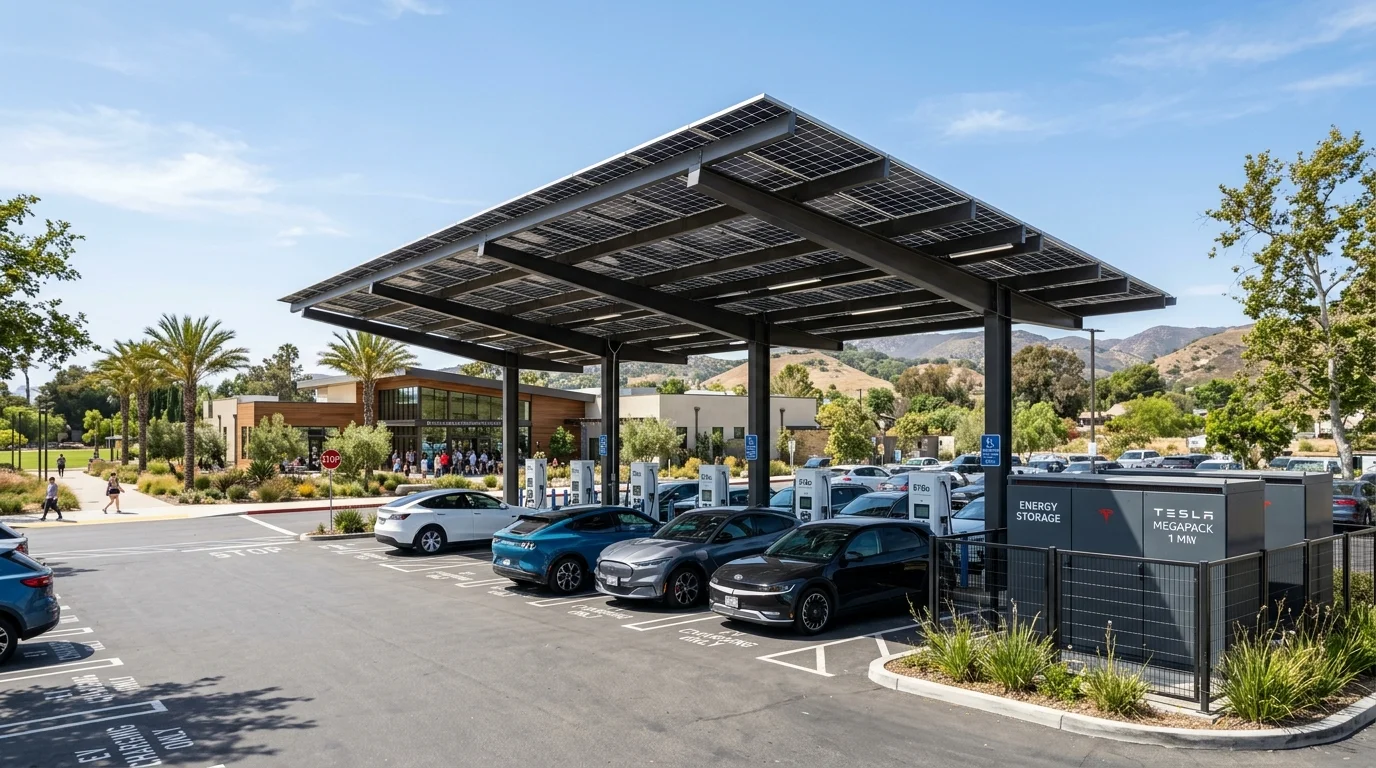
Fountain Valley needs an aggressive, modern energy plan that lowers municipal costs, shields residents from power surges, and generates long-term community revenue with zero taxpayer capital. By combining dual-use solar carports, commercial battery storage (BESS), and innovative public-private financing, we can turn underutilized public asphalt into clean energy generators that pay dividends for decades.
Under California's NEM 3.0 rules, exporting solar electricity to the utility grid between 10 AM and 3 PM yields only 5 to 8 cents per kWh. But buying electricity back during the 4 PM to 9 PM evening peak costs upwards of 50 cents per kWh.
The math is simple: rather than dumping excess midday power onto SCE's grid at a loss, we capture and store it on-site in utility-grade Battery Energy Storage Systems (BESS). When evening peak rates hit, the battery discharges to power municipal facilities, community centers, and water pumping stations.
By arbitrating the price spread, the city avoids buying expensive peak power, dramatically reducing operating costs and stabilizing our local electrical grid against brownouts.
Fountain Valley has a unique land footprint. Over 11% of our city (640 acres) is occupied by Mile Square Regional Park, which generates zero municipal property tax. Between the massive public parking lots at Mile Square Park, the Fountain Valley Civic Center, Fountain Valley High School, and our elementary campuses, we have acres of exposed, sun-baked asphalt.
Installing elevated solar canopy carports over these parking facilities creates a triple win for the community:
This is not an unproven concept. In December 2025, Orange Unified School District (OUSD) completed a comprehensive 7-school solar rooftop and carport canopy PPA project with Ameresco. The initiative locked in $6.3 million in guaranteed energy cost savings over 25 years without spending a single dollar of local taxpayer capital upfront.
If school districts in our county can secure millions in energy savings through smart procurement, the City of Fountain Valley can and should do the exact same for our municipal facilities, recreation centers, and public parks.
To maximize economic impact for Fountain Valley, we can leverage two powerful public finance tools:
As a USMC veteran and operations specialist, I believe in actionable execution over political empty promises:
We do not have to accept soaring utility bills and passive municipal governance. Fountain Valley has the tools, the technology, and the financial frameworks to build clean, resilient, and budget-positive infrastructure today.
Mark Leonard is running for Fountain Valley City Council. This article is part of his campaign to bring fiscal transparency and community-first solutions to our city.
Share your thoughts on this issue. We're building a campaign grounded in the real concerns of Fountain Valley families and residents.